Memorial Service Checklist: A Flexible Plan
Start with purpose and capacity
A memorial service can honor a life, gather a community, share a religious or cultural practice, create space for stories, or do several of those things. Name the purpose in one sentence and choose a plan the family has the energy, time, and resources to carry.
There is no required scale. A room, welcome, photograph, reading, music selection, and closing can be complete.
Confirm the family's essential choices
Before booking details, record:
- The primary decision-maker and one backup
- Cultural, religious, spiritual, or secular framework
- Public, invitation-only, or private attendance
- Whether remains or an urn will be present
- Date range, location type, and accessibility needs
- Budget authority and who may approve changes
- Privacy boundaries for stories, images, recording, and social media
Consult an appropriate faith or cultural leader where practice includes specific requirements. Do not ask one relative to represent an entire tradition from memory while also carrying every other decision.
Choose location, date, and format
Possible settings include a funeral home, house of worship, cemetery, community room, private home, outdoor site, or online gathering. Check capacity, seating, restrooms, step-free access, parking or transit, sound, weather backup, food rules, flames, insurance, and closing time.
Confirm the venue's written terms and responsible contact. For provider-related questions, use our guide to questions to ask a funeral home; this site is not itself a provider.
Choose in-person, hybrid, or remote format. A hybrid event needs a dedicated technology operator, not the person welcoming guests while holding a phone at shoulder height.
Draft a simple running order
A flexible structure might include:
- Arrival music or quiet
- Welcome and practical information
- Reading, prayer, or reflection
- Two or three prepared contributions
- Music, images, or a shared ritual
- Closing words and next-step information
Time each prepared element. Give speakers a clear limit, pronunciation notes, privacy boundaries, and the option to decline. Keep a backup reading in case someone cannot speak on the day.
Open-microphone sections can be meaningful but unpredictable. If included, name a facilitator, time boundary, and respectful-content expectation. The facilitator should be able to close the section gently.
Prepare the people and materials
Assign specific roles:
- Overall coordinator
- Venue and provider contact
- Greeter or usher
- Speaker liaison
- Music and sound operator
- Livestream or recording operator
- Accessibility contact
- Photograph, flowers, or display coordinator
- Reception and cleanup lead
Create a contact sheet and share the final schedule. Print large-type programs if helpful. Prepare name pronunciation, song files in the required format, captions or transcripts where feasible, and backup copies that do not depend on one phone.
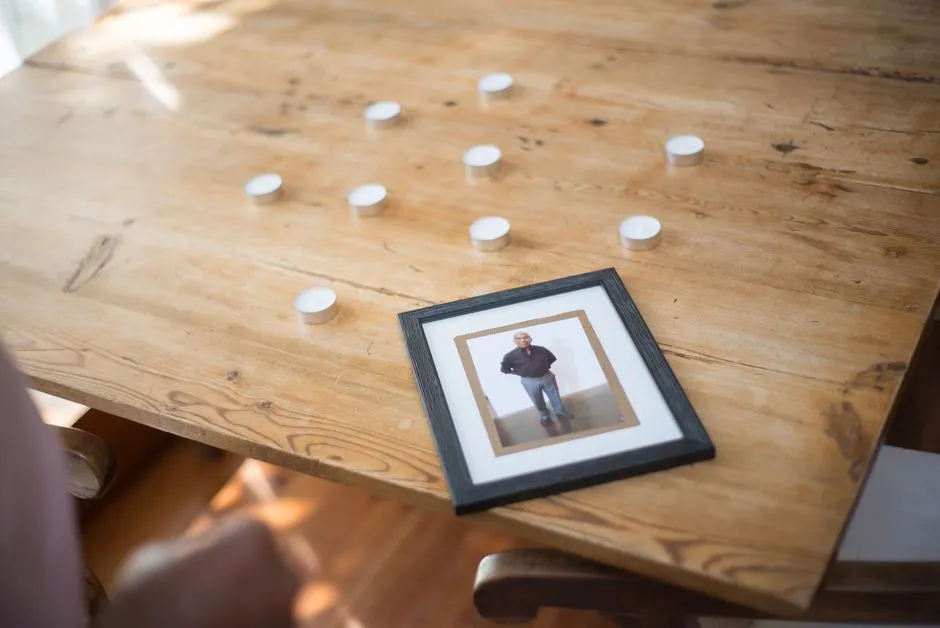
Photographs should be used with family agreement and respect for living people's privacy. Secure frames and candles safely. If using real flame, follow venue rules and assign supervision; battery candles may simplify logistics.
Make attendance easier
Send the exact address, entrance, time zone for remote guests, dress guidance if any, accessibility details, parking or transit information, and whether children are welcome. State whether the event will be recorded or shared online.
Offer a contact for accommodation requests. Consider seating near exits, a quieter space, hearing support, captions, mobility routes, dietary labels, and a way to participate without speaking.
The memorial planning collection treats access as part of welcome, not a final checkbox.
Rehearse only the fragile parts
Test microphones, music, slides, internet connection, remote links, lighting, and transitions. Confirm who has keys and who receives deliveries. Walk the route from parking or transit to the room.
Do not rehearse personal remarks until they become emotionally polished on command. Technical confidence is useful; human response can remain human.
Plan the close and the day after
Tell guests where to go after the formal program, where condolences or donations may be directed, and how photographs or recordings will be handled. Assign cleanup and item return so the closest family members are not automatically left with boxes and cables.
Afterward, share any promised materials, pay approved invoices, return borrowed items, and store or delete personal data according to the family's wishes. Write down unresolved tasks rather than expecting grief to improve administrative memory.
If planning or grief becomes overwhelming, reduce the event and ask trusted people for concrete help. A licensed provider, celebrant, cultural leader, community organization, or qualified grief professional may support different parts of the process. None can prescribe one correct way to feel, and neither can a checklist.